Cutting Twin-Wall Polycarbonate to Length Without Crushing the Flutes
Multiwall is hollow, light and easy to ruin. Why the damage happens at the overhang, and how to avoid it.
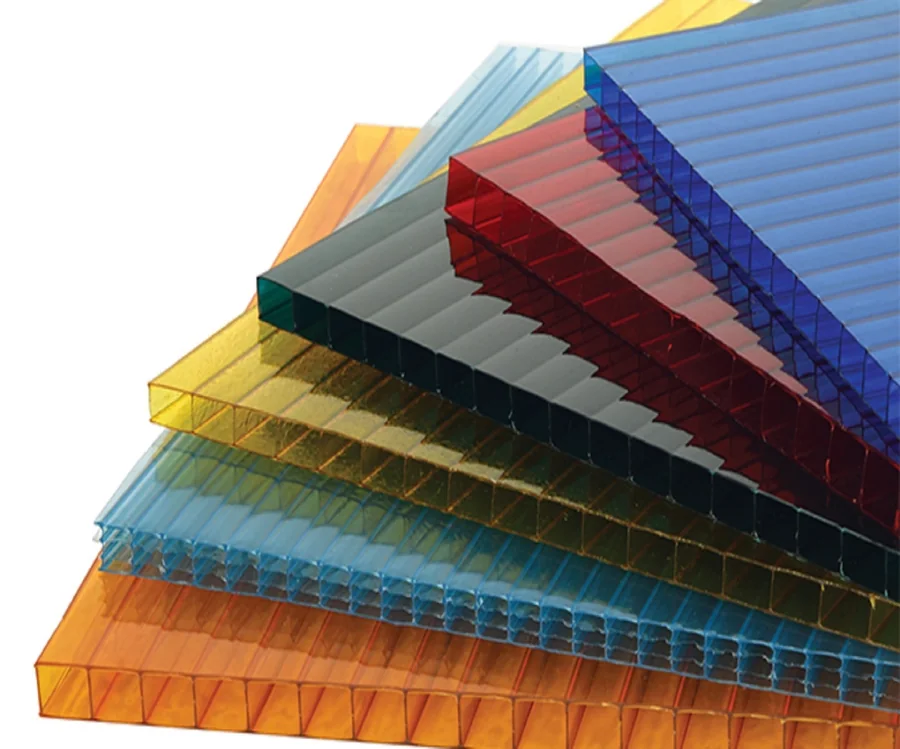
Twin-wall and multiwall polycarbonate is one of the easiest materials to cut and one of the easiest to ruin. It is light enough that one person can carry a long sheet, which is exactly why it usually ends up cut in the worst possible way: balanced across two trestles with most of its length hanging in the air.
Why the flutes crush
The sheet is hollow. Its stiffness comes from the webs between the two skins, and those webs only resist load in compression when they are backed by something. Let a metre of sheet overhang a trestle and the panel bows under its own weight; press down to steady it while the saw goes through and the webs at the edge of the trestle fold.
The damage is easy to miss indoors and impossible to miss once the panel is glazed and the light rakes across it. A crushed line reads as a dark stripe the length of the sheet.
Two rules that prevent almost all of it
Support the whole sheet, every centimetre of it
Not two points. Not three. A continuous bed, so that no part of the sheet is ever spanning air and no part of it has to be held down. On the RailTable 4000 the bed is 740 mm deep and runs the full 157 in (4,000 mm) of the frame, so a long glazing sheet lies flat along its entire length including the offcut.
Steer the tool with a rail, not with your weight
Most crushing happens because the operator is leaning on the panel to keep the cut straight. Once the saw rides a 20 mm (0.79 in) profile rail over the full span, there is nothing to steer — the carriage goes where the rail goes, and your hands are not part of the accuracy of the cut.
Practical points for multiwall
- Cut with the flutes running the way they will be installed. Multiwall is glazed with the flutes vertical so condensation can drain. Decide the orientation before cutting, not after.
- Leave the protective film on both faces. It is also usually printed to tell you which side is the UV-protected face, and that label is the only reliable way to know once the sheet is cut.
- Blow the swarf out of the open flutes. Cut ends are open channels, and any dust left in them is permanently visible once the sheet is sealed with tape.
- Keep the offcut on the bed. The offcut is the part most likely to take the damage, because it is the part nobody is supporting.
Squareness matters more here than it looks
Multiwall is glazed into a system: rafter bars, glazing bars, end caps and tape. Every one of those parts assumes the sheet is a rectangle. A sheet that is two millimetres out of square across a three-metre run will not sit in its bars evenly, and the usual response — forcing it — is the second most common way flutes get crushed.
The awkward part is that you cannot easily check a long, light sheet for square by eye, and you cannot lay a framing square across it without pressing on it. Which means squareness has to come out of the cut rather than be verified after it. That is the argument for a guided rail over a clamped straightedge: the rail is square to the bed before the sheet arrives, so every cut inherits it.
Sealing the cut ends
A cut end of multiwall is a row of open channels. Left open, they fill with dust, insects and water, and no amount of cleaning afterwards will get them out once the sheet is glazed. Manufacturers supply breather tape for the bottom edge and solid tape for the top, and the order matters — the top is sealed so nothing gets in, the bottom is taped with a vented tape so condensation can drain out.
Do the taping while the sheet is still flat on the bed and still has its film on. It is a two-minute job there and an awkward one up a ladder.
When the sheets are all the same length
Glazing runs are usually a batch of identical panels, which is the case an adjustable stop is built for. The stop runs the full length of the table: set it once against the first correct sheet, then cut the rest without measuring anything. That matters more with polycarbonate than with most materials, because handling a long light sheet repeatedly is where the dents come from, and every re-measurement is another handling.
What else the same setup does
The second carriage takes a router or groover on the same rail, so channel work, edge trimming and V-grooving of composite and foam PVC happen on the same bed without moving the panel. For a shop that glazes and also makes signage, that is one machine covering both.
Where to read the numbers
The seven sheet materials the bed is built to carry are listed on the home page, the frame and bed specification is on the specification page, and the quote form will get you a delivered figure for your address.
Comments 0
Be the first to comment.