Moving a 13-Foot Cutting Table Between Shops
The legs unbolt. The frame does not. What that means for a move, a first delivery, and a shop that might relocate.
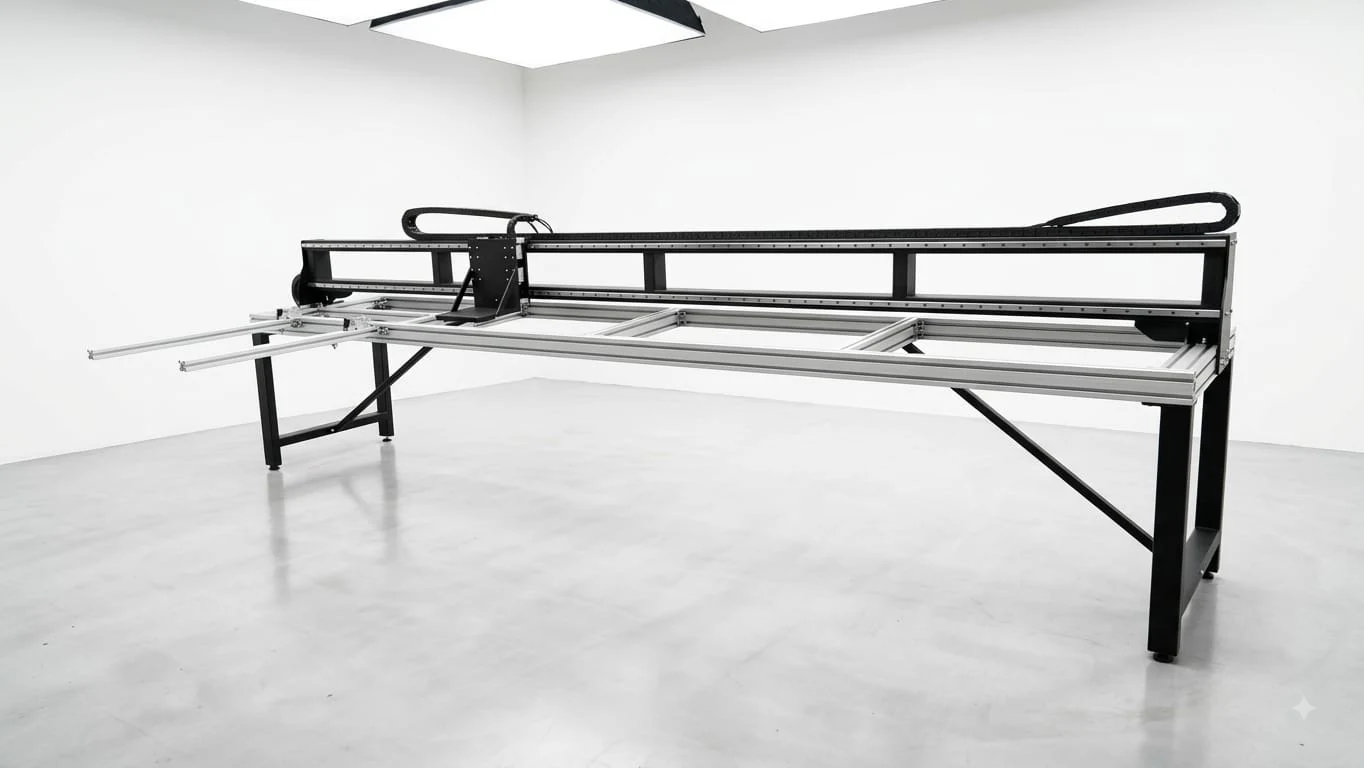
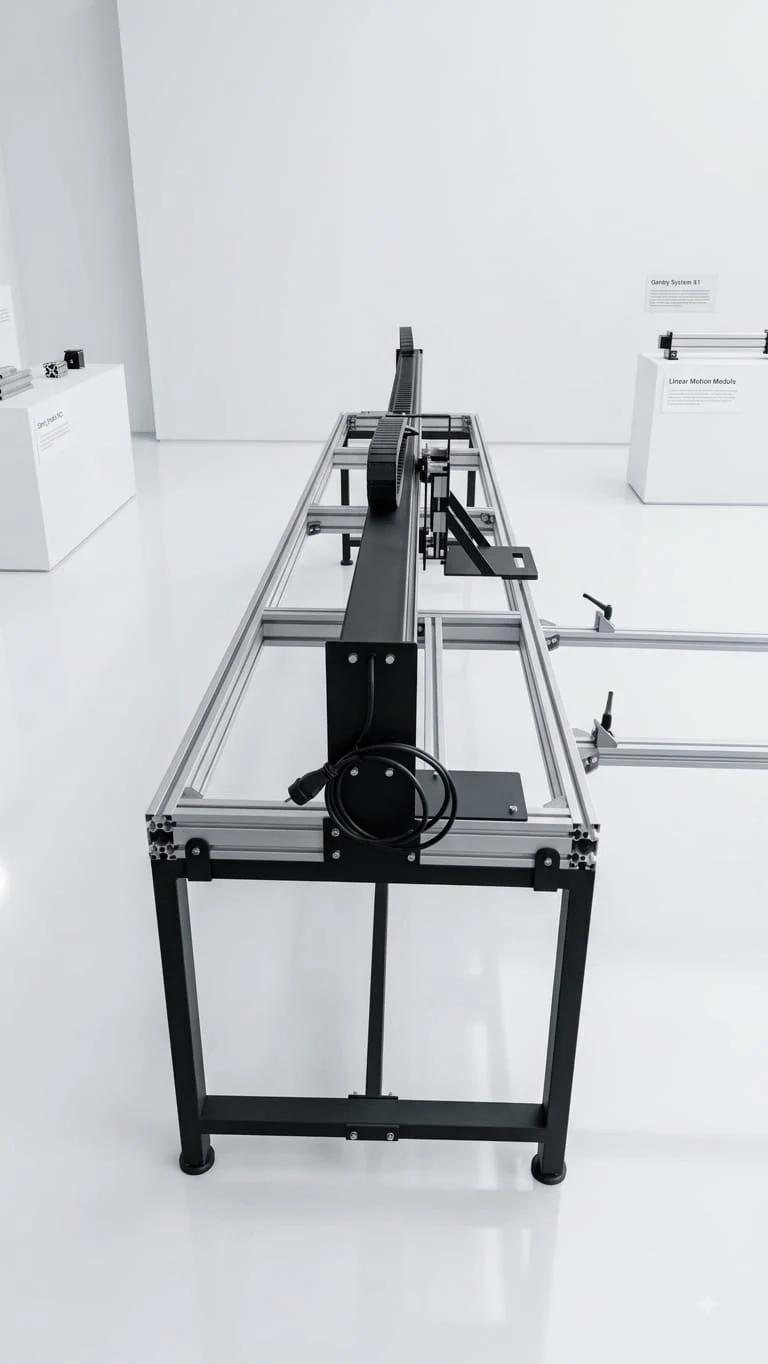
The honest headline: the legs, the stop and both carriages bolt off. The frame does not. It is a single-piece welded weldment 157 in (4,000 mm) long, and that is on purpose — a frame joined in the middle is a frame that goes out of square in a year, and the whole accuracy argument for this machine rests on it being one piece.
So a move is a move of one long, rigid object plus a box of parts.
What comes apart
| Part | Comes off? | Notes |
|---|---|---|
| Legs and cross braces | Yes | Hex keys; no alignment on reassembly |
| Saw carriage | Yes | With your saw still mounted, if you want |
| Groover carriage | Yes | Same |
| Adjustable stop | Yes | Note the setting if you are mid-job |
| Cable duct | Yes | Travels with the beam or separately |
| Frame | No | One welded piece, 157 in (4,000 mm) |
What that means in practice
For the first delivery
The crate is one piece, 157 x 31.5 x 19.7 in (400 x 80 x 50 cm), and it fits a 20 ft container. Walk the route it has to take before it arrives: the loading door, every corner it must turn, and whether it comes off a dock or off a tail lift onto the ground. A crate this long cannot turn a tight corridor corner, and that is the thing people discover on the day.
For a move between shops
Two people, a van long enough for the frame, and half an hour at each end. Take the legs off, lay the frame on its side on something soft, and keep the profile rail off the floor — it is the one surface on the machine that a knock actually matters to.
For a shop that might relocate
This is worth thinking about before you buy, not after. If your unit is short-term and the next one is unknown, the constraint is not the weight, it is the 13 ft length and every doorway between here and there. A track saw does not have that problem; neither does a vertical panel saw, which comes apart into panels. This machine’s advantage — a single-piece guide over its whole length — is exactly the thing that makes it awkward to move, and it is fair to weigh one against the other.
Why the frame is one piece, since it is the whole trade-off
It is fair to ask why a machine this long is not made in two halves that bolt together. Plenty are.
A joint in the middle of a guide is a joint in the middle of every cut that passes over it. However carefully it is machined, it is two surfaces held in contact by fasteners, and fasteners relax. The day it is assembled it may be within a tenth; a year of a shop floor later — vibration, a knock from a forklift, a panel dropped on the end — it is wherever it has ended up, and the fault appears as a bow at mid-span on every long cut. That is the hardest fault to diagnose, because it is intermittent in the sense that nobody notices until a part will not fit.
A welded, squared, single-piece frame has nothing in the middle to move. That is the reason for the length, and the reason it will not go round a tight corner. Both things are the same decision.
A checklist for the day of the move
- Photograph the stop setting if you are mid-job. It is the one piece of information a move destroys.
- Take the carriages off and box them with their tools still mounted if you like. They are the parts a knock actually damages.
- Take the stop off and travel it separately, not resting on the frame.
- Legs off, braces off, bag the fixings and tape the bag to the frame. A bolt that travels loose in a van is a bolt you buy again.
- Lay the frame on its side on something soft, profile rail upward and clear of everything.
- Measure the doorways at both ends first, not when the frame is already in the van.
If it has to be stored
Store it on its legs if you have the floor, and on its side on bearers if you do not — never flat on a concrete floor, where condensation collects under it. The profile rail is the surface to protect: oil it lightly, cover it, and do not let anything be stacked against it. Everything else on this machine is steel box section and aluminium extrusion and does not much care.
Reassembly
There is no alignment procedure. The accuracy is in the weldment, not in the assembly, so the legs, the stop and the carriages bolt back on with the hex keys from the crate and the machine is square because the frame is square. Plan for two people because of the length, not because the work is difficult.
Check one thing afterwards: cut a test panel wider than it is long and measure both diagonals. Equal diagonals and you are back where you were.
Where to read the numbers
The crate size, the frame length and the full packing list are on the specification page. The floor and access questions to settle before delivery are in what a cutting table needs from your shop floor, and the honest trade-off against a portable tool is on the comparison page.

Comments 0
Be the first to comment.