What a 13-Foot Cutting Table Needs From Your Shop Floor
Floor run, walking room, working height, power, and how a 13-foot crate gets through your door.
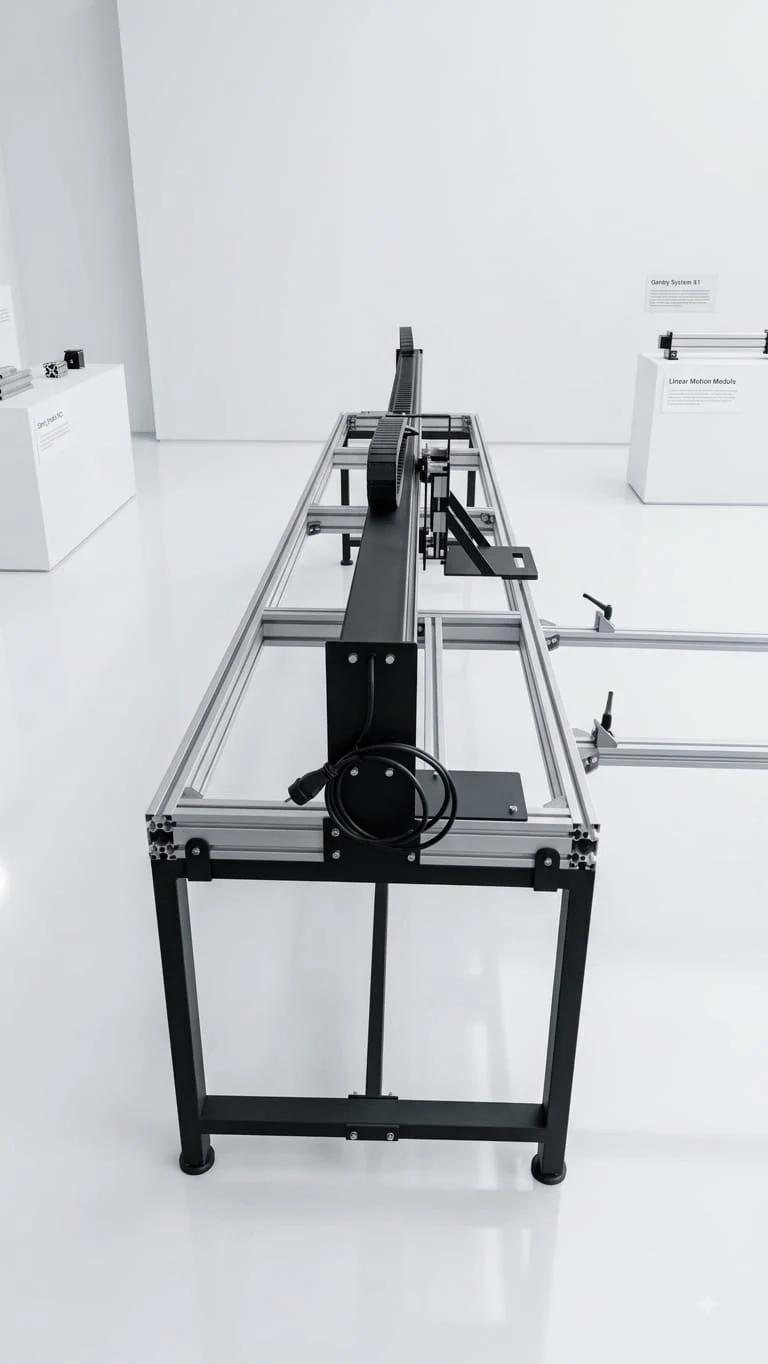
A 13-foot machine is not a difficult thing to install. It is a difficult thing to install badly and then have to move. The questions below take ten minutes with a tape measure and save an afternoon of regret.
1. The run of floor
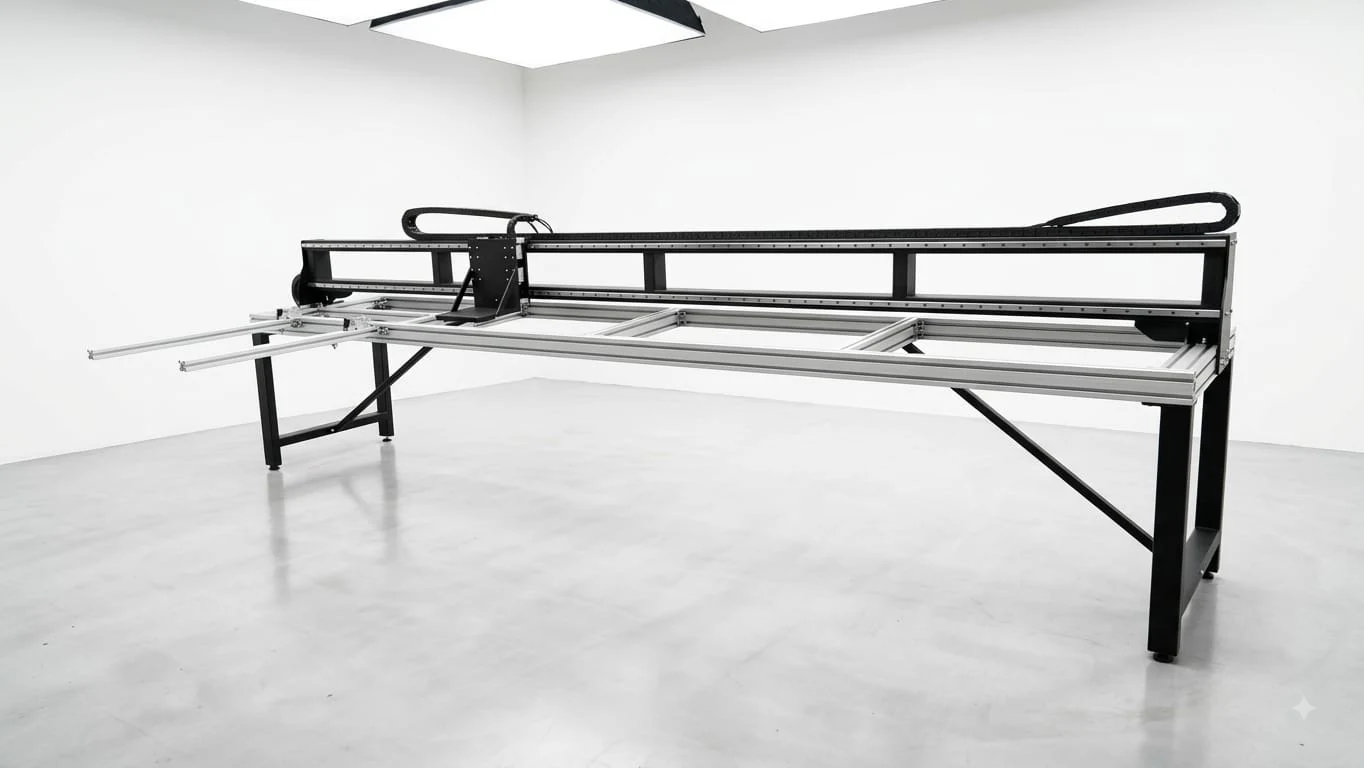
The frame is a single-piece 157 in (4,000 mm) weldment. That is the number that has to fit — not the footprint of the legs, the frame itself, because it does not fold and it does not come apart. Measure the clear run of wall or floor where you intend it to live, and measure it at the height the table will occupy rather than at skirting level, where a pipe or a socket box can steal 2.5 in.
If your shop cannot give up 13 feet in one line, this is worth knowing before anything ships. A 19 ft 8 in (6 m) frame is available built to order at a price difference, so the answer to a longer shop is easy; the answer to a shorter one is not.
2. Room to walk one long side
You feed the panel from one side and you walk the carriage down the rail. In practice that means a working aisle along one long face, with enough room to carry a full sheet past it without turning it on edge. The other long side can sit against a wall.
The bed is 740 mm deep and overall height is 1,150 mm, so the machine does not block sight lines the way a vertical saw against a wall does — but a sheet is wider than the bed, and the sheet is what needs the room.
3. Working height, and whether it suits your people
Working height is 830 mm. That is a standing-work height for loading and pushing a panel to the stop. It is worth standing where the operator will stand and imagining lifting a full sheet onto a surface at that height, because that, not the cutting, is the physical part of the job.
4. Power, which is simpler than people expect
The table has no motor and not one electronic component of its own. There is nothing to wire, nothing to commission and no controller to fail. A 220 V supply cable runs in the moving cable duct along the beam; its job is to carry the lead of the tool you mount on the carriage so the cable does not drag across the panel.
So the electrical question is not about the table. It is about the circular saw and the router you already own, and they are already plugged in somewhere in your shop today.
5. Extraction, and where the chip goes
Whatever extraction your saw and router already use is what this setup uses, because they are the same tools. What changes is that the cut now happens in one fixed place rather than wherever the trestles ended up, which makes a permanent extraction run worth putting in.
6. How the crate gets through your door
This is the question that catches people out. The machine ships as one crate, 400 by 80 by 50 cm, which fits a 20 ft container. Before it arrives, walk the route it has to take: the loading door, any corner it has to turn, and whether there is a dock or whether it is coming off a tail lift onto the ground.
A 13-foot crate cannot turn a tight corridor corner. If the only way in is through a doorway at the end of a narrow passage, find that out now rather than on the day. Freight is priced per country and the quote form asks whether you have a dock, because the answer changes the number.
7. What to expect on timing
Build time is five days from order. Transit to the Americas is approximately 25 days by sea, and the stated lead time for the Americas is around 30 days, built to order. For Turkey and nearby, stock is available on request. Best freight economics are a 20 ft container with two or more units, which matters if you are buying with somebody else.
A ten-minute checklist
- Clear run of floor: at least 13 ft in one line, measured at bed height.
- Walking aisle along one long side, wide enough to carry a full sheet past.
- Operator comfortable loading at 830 mm.
- A socket for the tool you will mount — nothing needed for the table itself.
- Delivery route walked end to end for a 400 by 80 by 50 cm crate.
- Dock, or no dock, decided before you ask for a price.
Where to read the numbers
Every figure above is on the specification page, along with the full packing list of what is in the crate. If you want a delivered number rather than a machine price, the quote form asks for the four things freight actually depends on.
Comments 0
Be the first to comment.